Looks identical?
It isn't.
Today all you need is to ask “Build me my own Claude.” One prompt, and the interface matches.
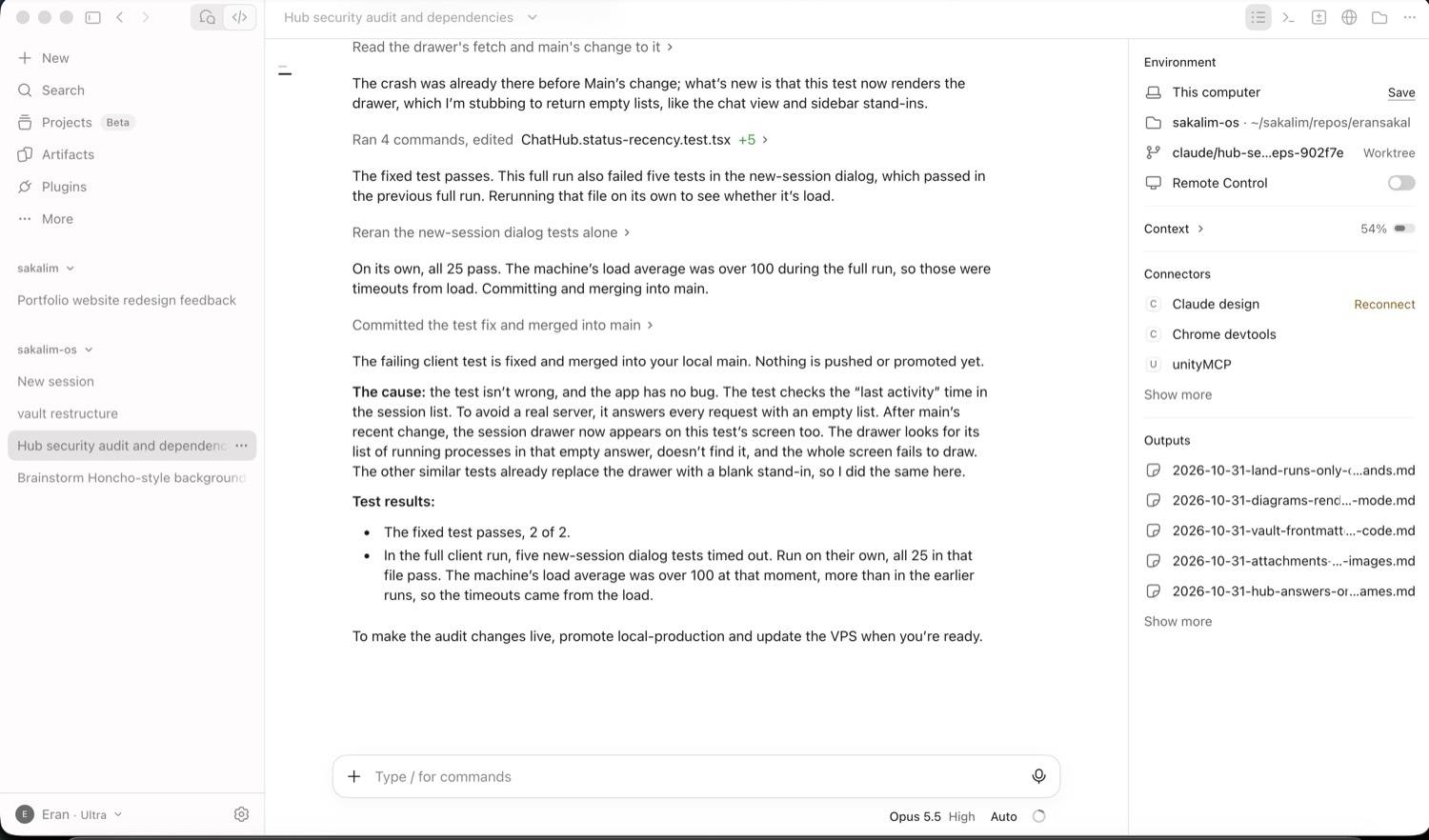
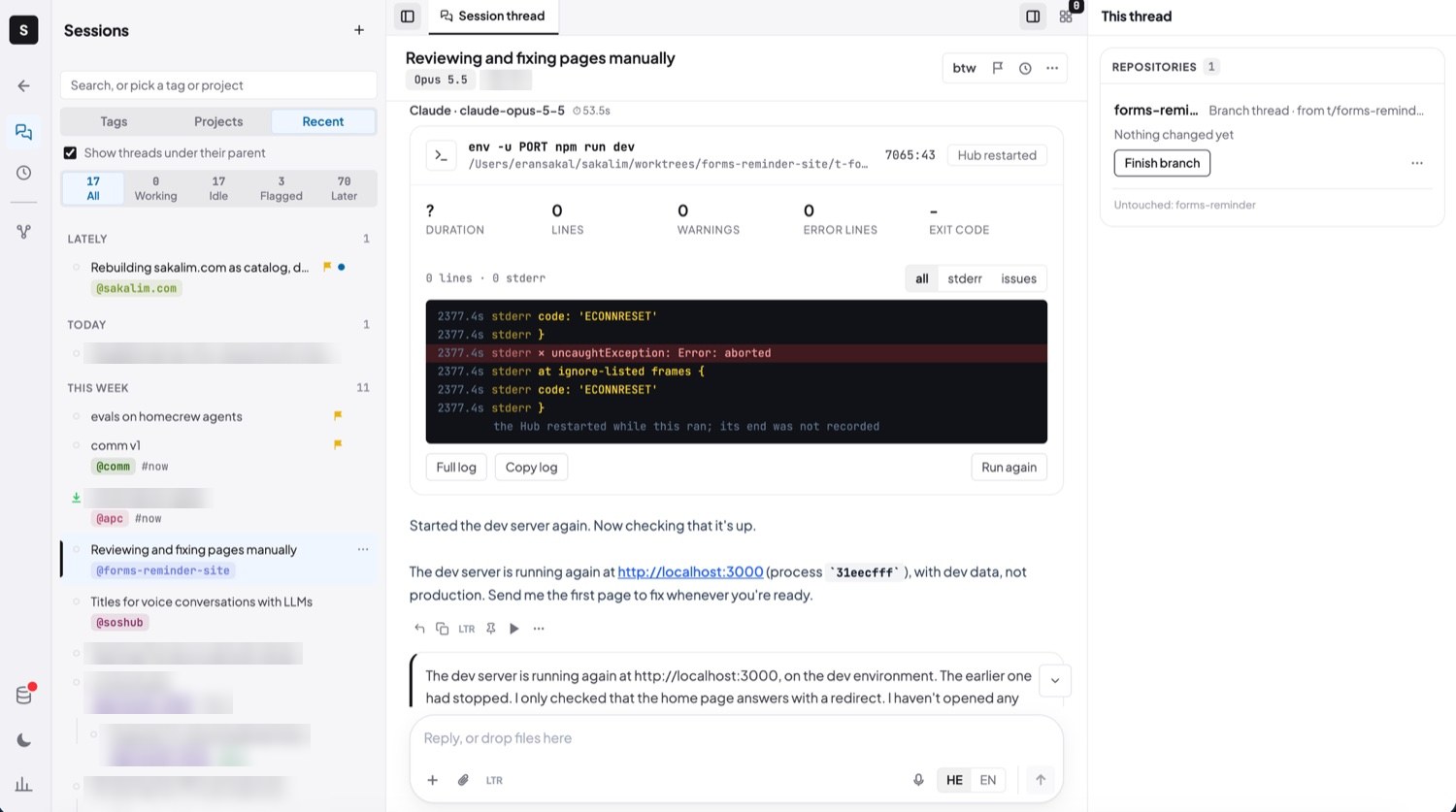
Writing interfaces and behaviors is cheap today.
Telling the story, and delivering value to your users and your company, is the real challenge.
Same skeleton.
Different reasons.
Same features. Different reasons. Different product.
Read the feature matrix.
So much looks the same.
16 shared features, about 55% alike on average. Not a complete list, and it grows every day.
Take one example.
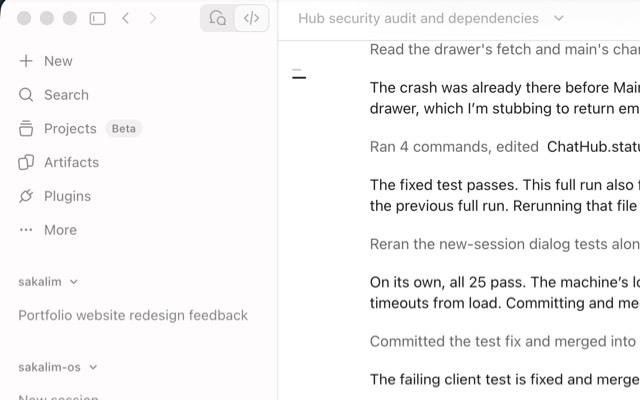
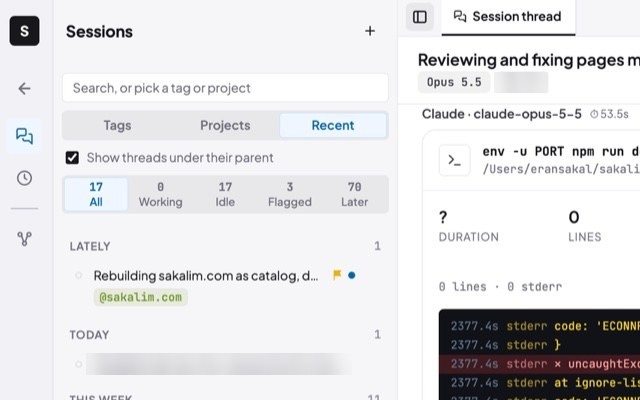
The list of sessions.
Both list your conversations. Look closer, and every row is decided differently.
Next: the sessions list up close, one decision at a time.
Sessions list
This feature is 70% similar between the Sakal Studio and the Claude interface.
I run many sessions at once. The list is where I decide what to look at next, so it has to tell me which session needs me without opening any of them.
Same list, but every row tells you what it needs.
Claude groups conversations by project and shows their titles. The studio's list carries the state of each session: which one is working, which is waiting for me, what is blocked, what is parked for later and what is done, with filters and quick actions on every row.
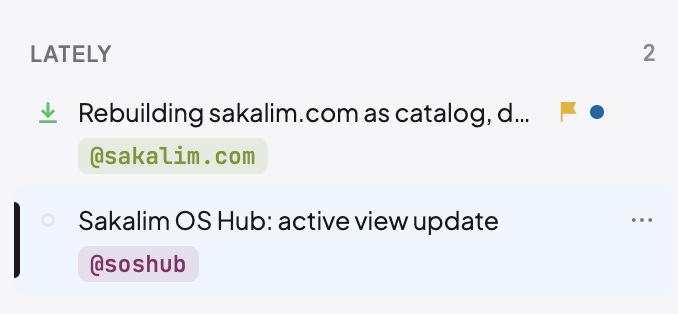
Status at a glance
Each row shows the session's state: flagged, unread, ready to land, its project and its tags. I know what it needs without opening it.

Blocked by another session
A session waiting on another one says so on its row, so I don't pick up work that can't move yet.
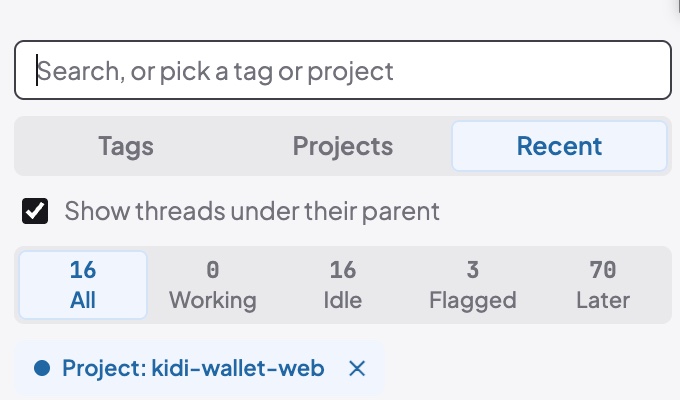
Sort and filter
Search, or narrow the list by tag, project or status, and see at once how many sessions are working, idle, flagged or parked for later.
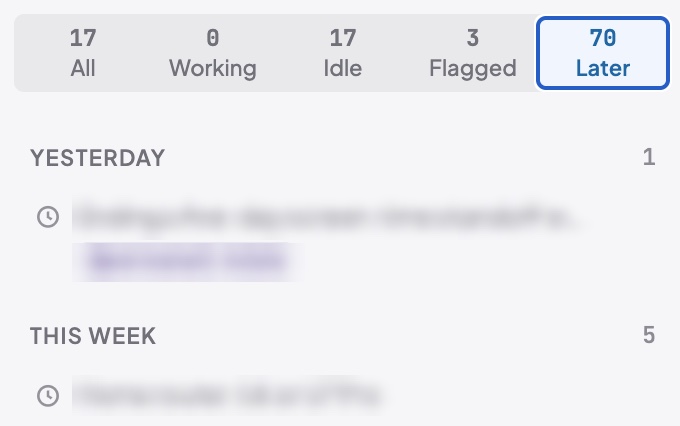
A separate zone for later
Sessions I park for later leave the main list and wait in their own zone, so the list shows only what is live now.
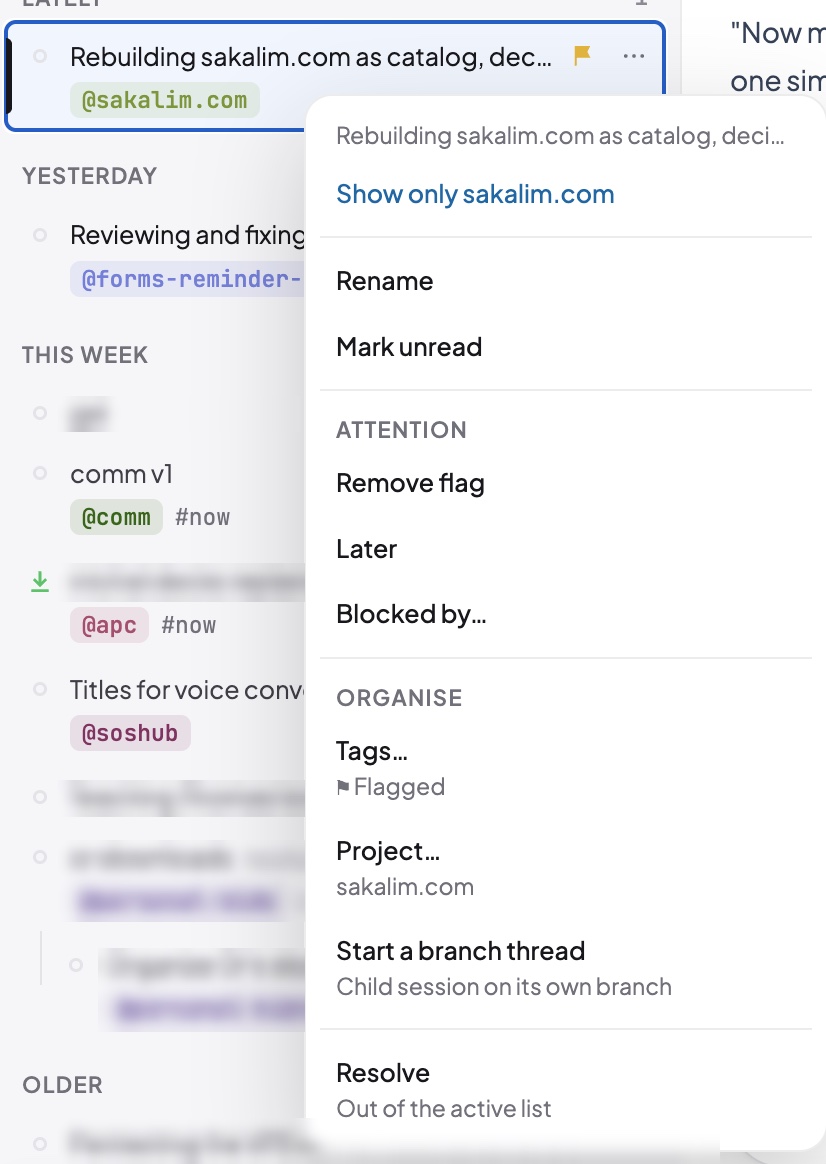
Quick actions on every row
One menu per session: rename, flag, park for later, mark as blocked, tag, move to a project, start a branch thread, or resolve it.
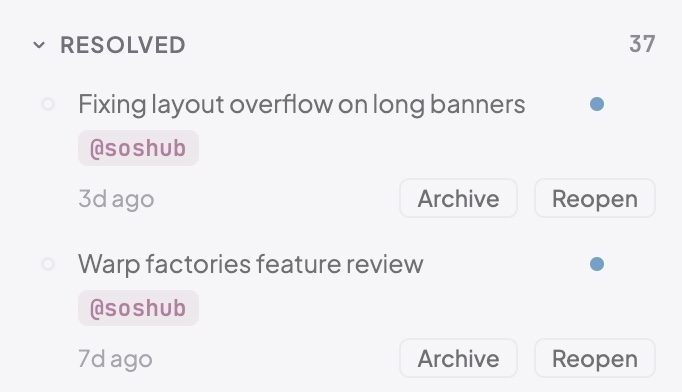
Resolved automatically
Sessions I left unfinished are resolved automatically, so the list clears itself and stays current. They are grouped and kept at the end of the sessions list, where I can archive them for good or reopen them later.
Clarifying questions
This feature is 50% similar between the Sakal Studio and the Claude interface.
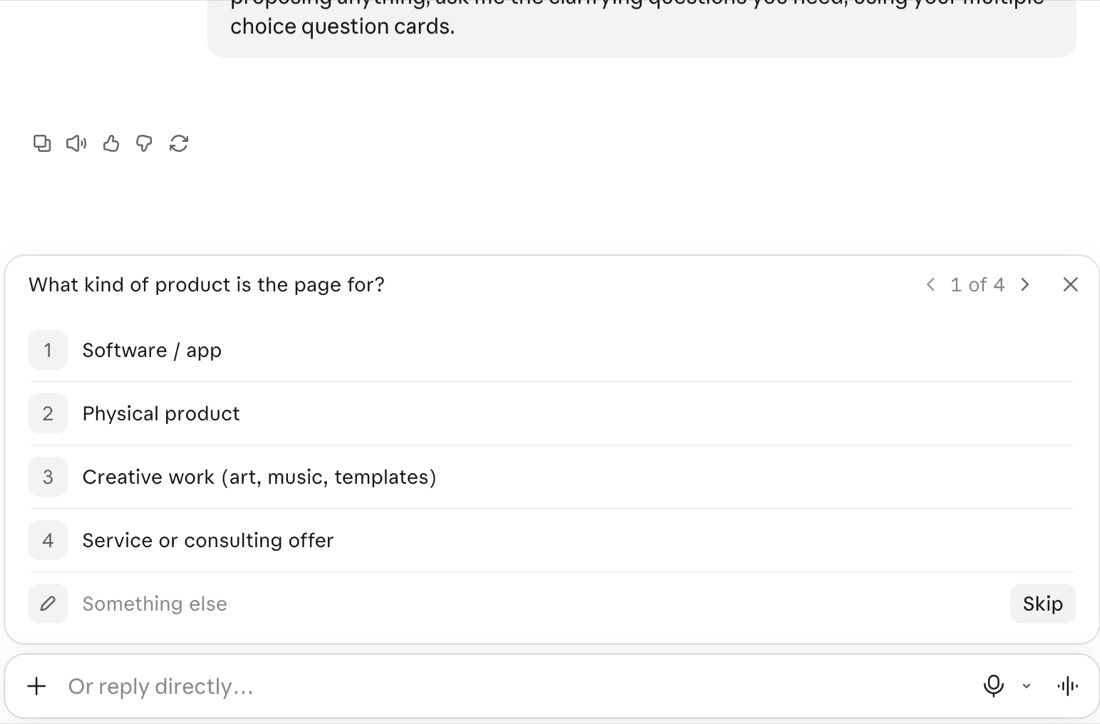
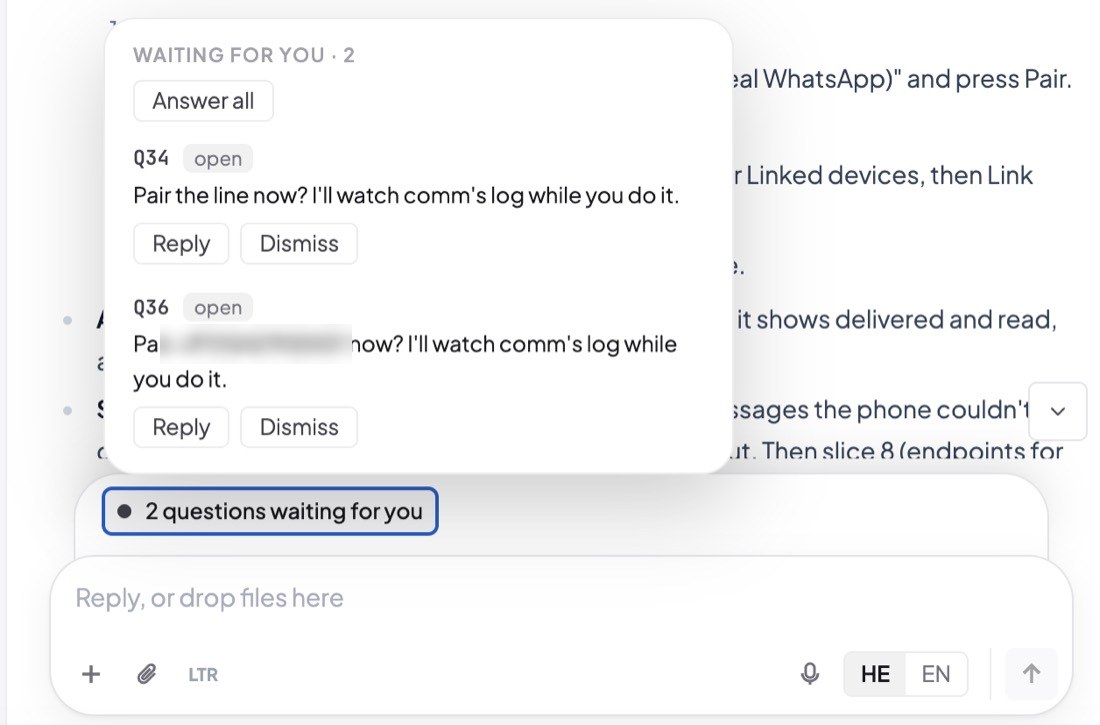
My brain works by association, so I keep sending questions and tasks into the same session without waiting. Nobody has the patience to sit and read what the model wrote before the next thought arrives. The agent keeps working, open questions wait in a list, and when my head is clear I go back, read what came back and check that everything was addressed.
Same choice card, but the stream never stops for it.
Claude shows its questions in a card docked above the input, one at a time, with a counter. You can answer, skip or reply in your own words, but close the card and the questions are gone: nothing keeps them open. In the studio the questions belong to the session. They stay in a list, you answer when it suits you, several at once or skip some, and the agent keeps working and writes down what it assumed.
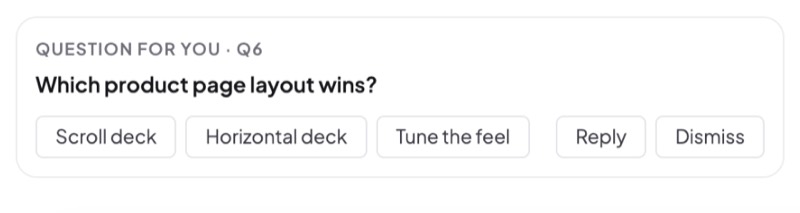
End-of-turn question
Every turn ends with a question about what should happen next, with the likely answers as buttons you can press.
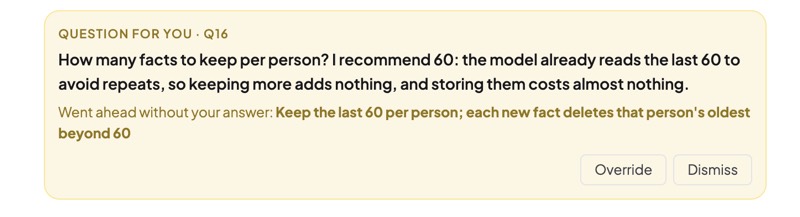
Question override
The agent can ask a question and still take a decision. The decision is shown, not swallowed in the stream, and you can override it without losing the context.
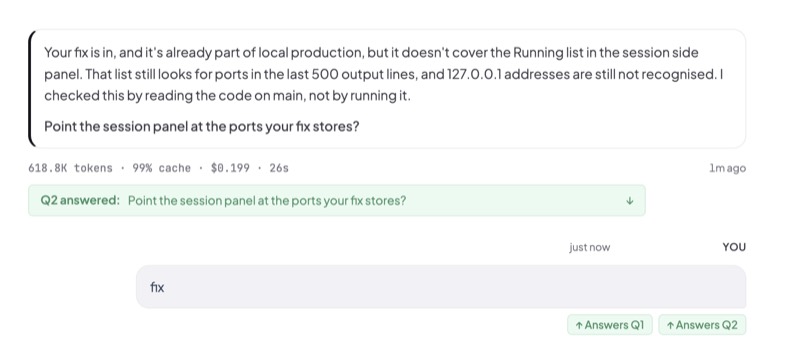
Automatic mark as answered
The agent works out for itself whether a question was answered. One reply can answer several questions, not only the last one.
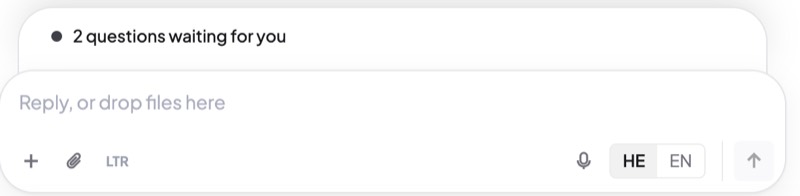
Open questions banner
The open questions wait in a banner above the input, patiently, without stopping your stream of thoughts.
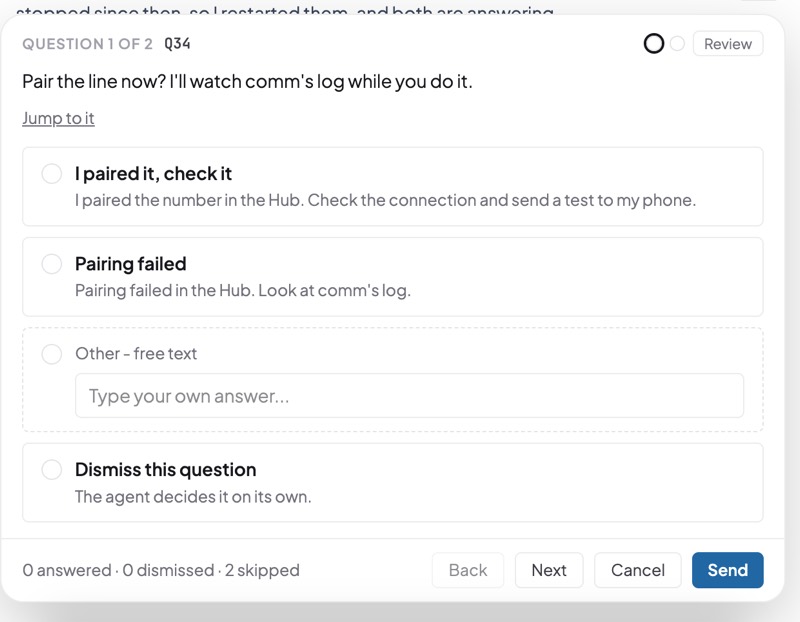
Bulk answer
Answer several open questions in one pass: step through them, pick an option or write your own, or leave the decision to the agent.
Artifacts vs prototypes
This feature is 30% similar between the Sakal Studio and the Claude interface.
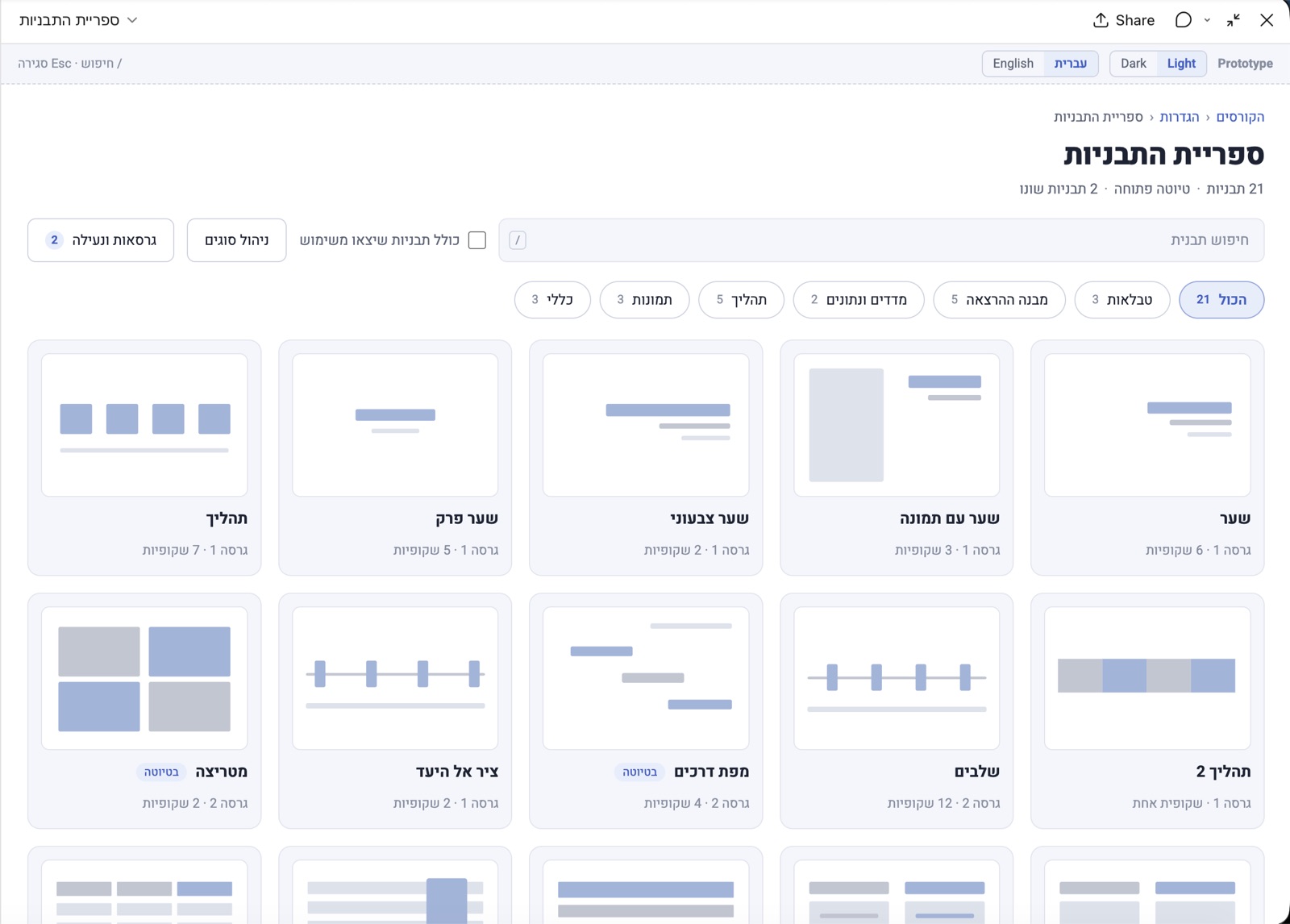
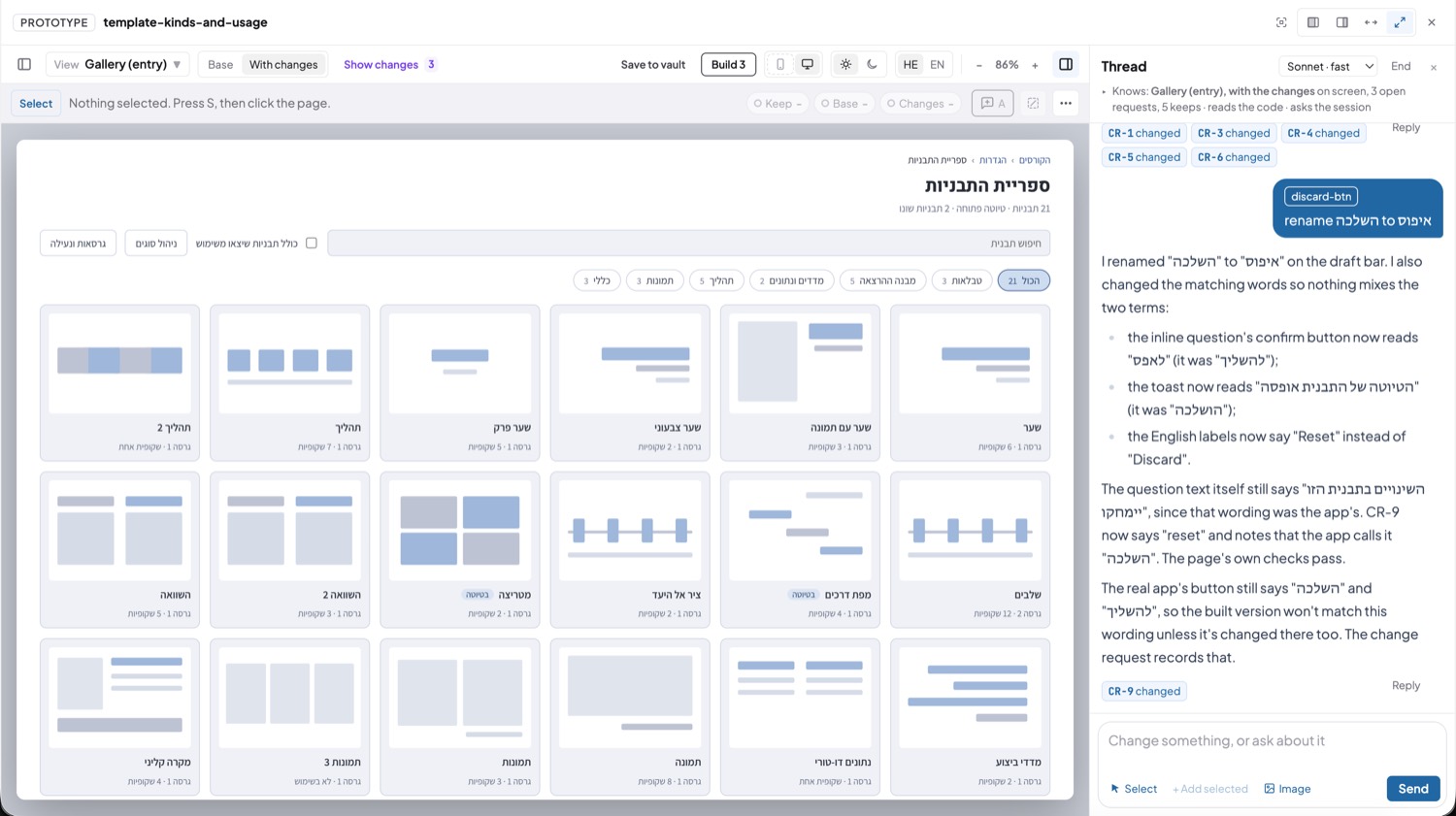
I want to react to a design, not to a description of it. The studio is built to create a prototype fast and accurately, and to use it as a base for comparison: a new screen is built on an exact copy of the app as it is today, so I see precisely what changed and what did not. The agent receives a precise list of changes and touches only those, instead of guessing from a comparison.
Same word, a different job: a preview versus a workflow.
A studio prototype is a workflow, not just a display: a base that looks like the app today, the new design on top, change requests tracked across versions, and a Build button that hands the approved version to code. The interface follows the kind of output: tied to a codebase it gets the whole workflow, made on the fly it looks closer to an artifact. Claude adds publishing, sharing and AI-powered apps inside the artifact.
Parallel work. At any moment the base can be synced and the relevant change requests replayed onto it, so sessions working in parallel stay on the same ground.
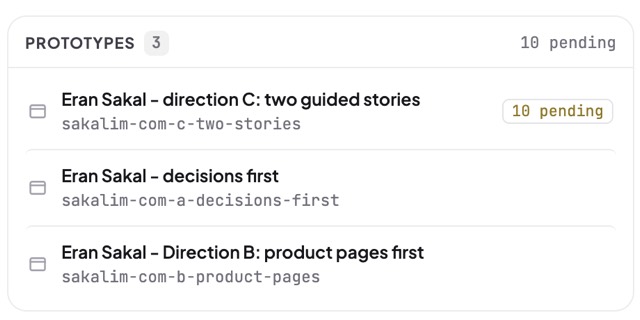
Prototypes live next to the session
Each session lists its prototypes, with how many change requests are still pending. The design work sits beside the conversation that produced it, not in a separate tool.
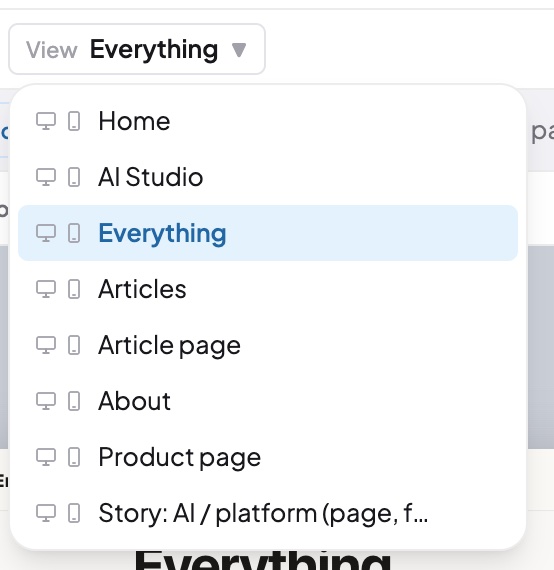
Built as views, with the flow between them
A prototype is a set of views, so I can plan several screens and states and see how one leads to the next.

Languages, devices and theme built in
Language, device and light or dark theme are switches the card draws for every prototype, so no design has to draw its own.

Mobile or desktop, generated on request
A design starts with the layout it needs. If I ask for another, the card offers to add it, and no change request is created because the app did not change.
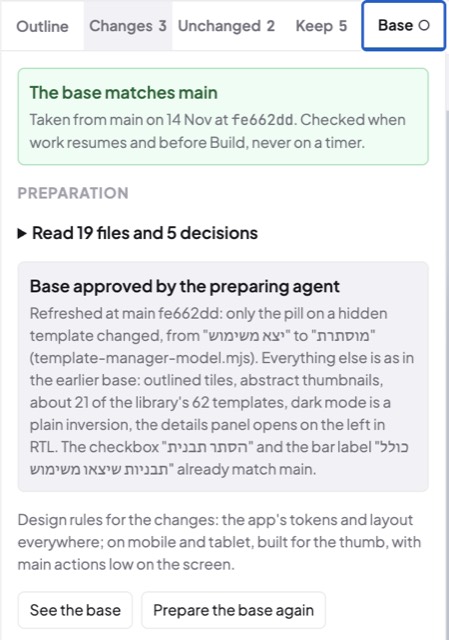
A base that is the app today
Every prototype starts from an exact copy of the screen as it is now. The base is checked against the code when work resumes and before every build, never on a timer.
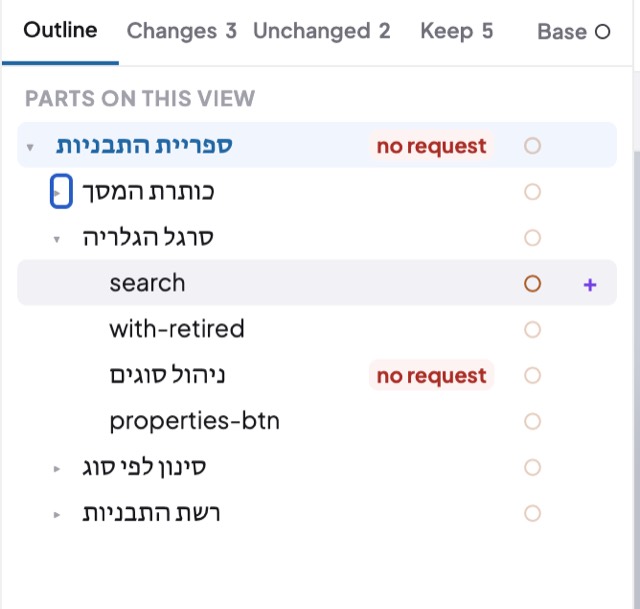
Every element is tagged, containers included
The outline lists the parts of the current view as a tree. Each one is selectable and shows whether any change request touches it.
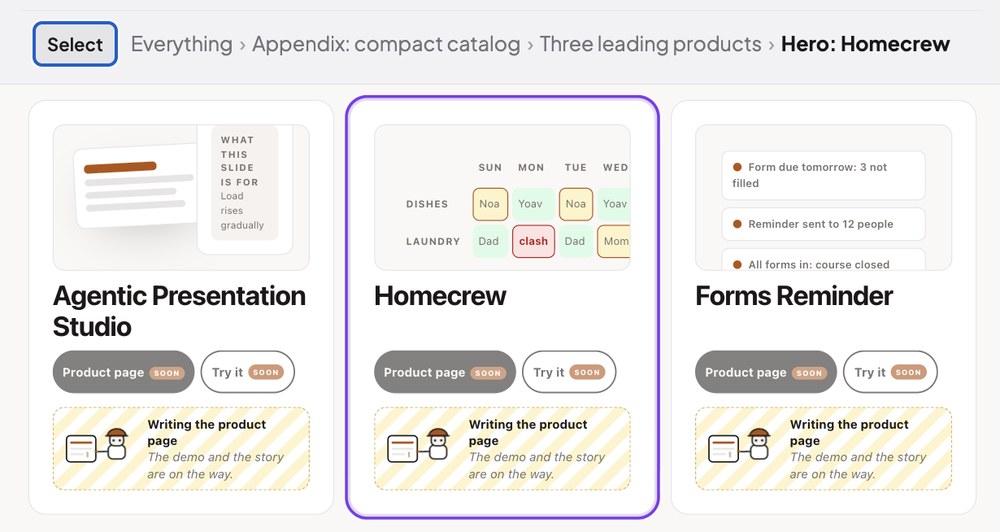
Select an element
Press S and click a part on the preview. The purple box marks what I selected, and the bar above shows where it sits in the page. The agent gets the exact part I mean, not my description of it.
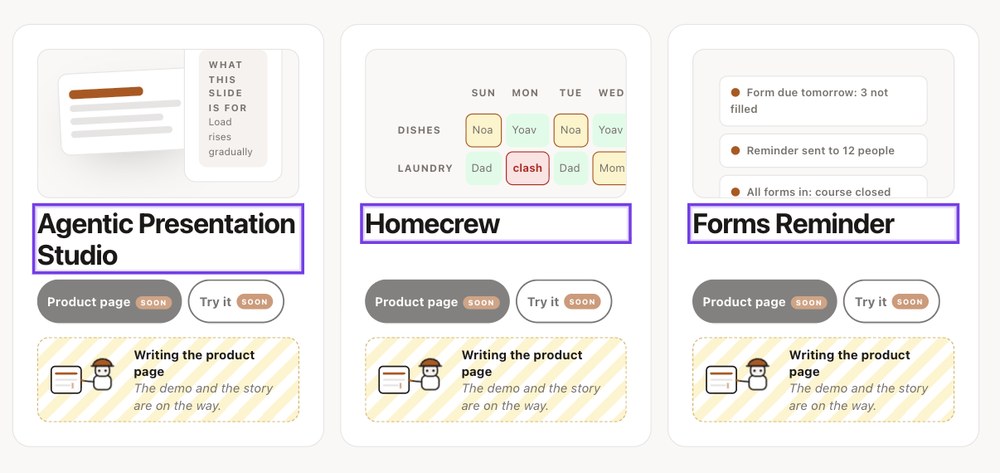
Select a group of elements
I can pick several parts at once, here the three titles, and ask for one change to all of them. Or I can dive into a container and pick one specific component inside it.
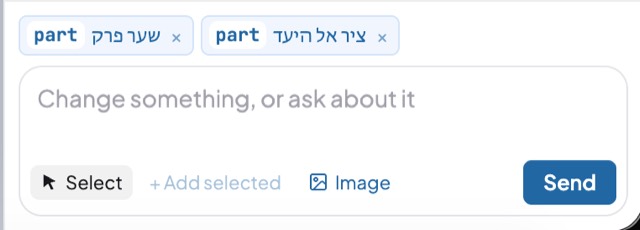
One message, many targets, with images
A message can address several parts, or a whole view, and carry images. The parts show as chips above the input.
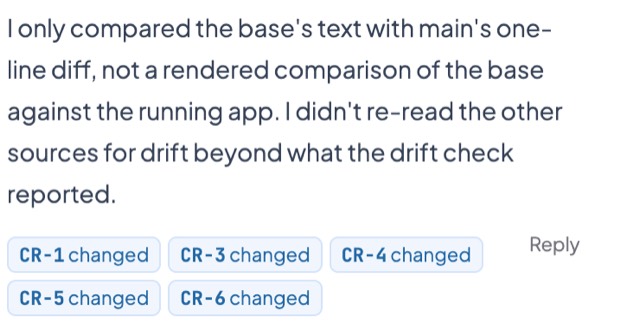
One turn, several changes, and a thread about it
A single message can change several requests at once. The answer says which ones, and I can reply to any answer to start a new run from that exchange.
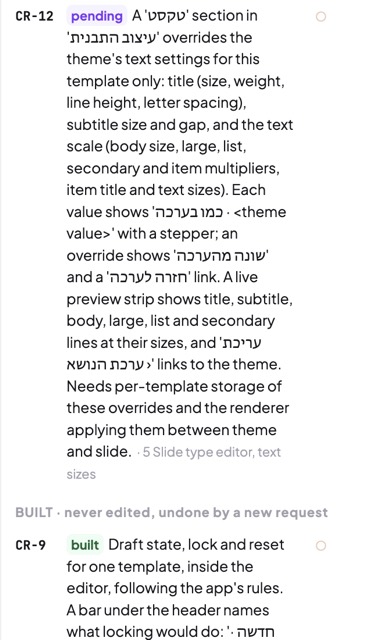
Change requests with a status
Each change is pending, built or undone, tracked across versions, so a prototype can evolve and be rebuilt without losing track of what was already done.
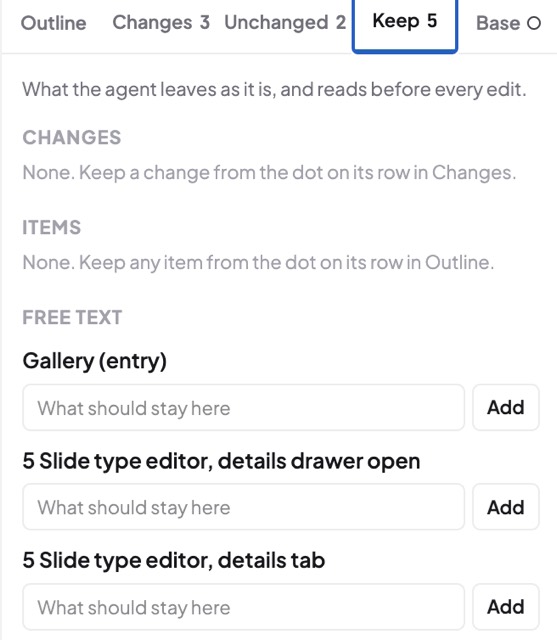
Keeps: what the agent must leave alone
I can pin a change, an item, or a line of free text per view. The agent reads the keeps before every edit and changes them only when I name them.
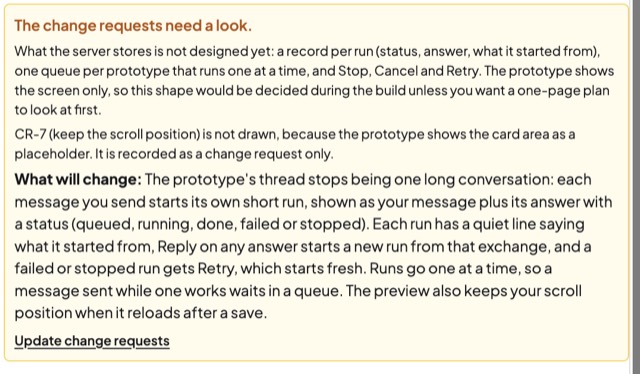
Outside agents check the leading thread
Independent agents review the work of the prototype thread and say what needs a look, here a request whose server side was not yet designed, before anything is built.
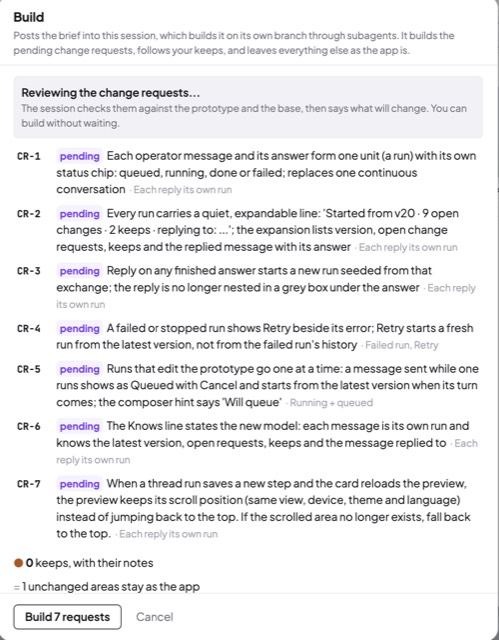
Build: a summary I approve
Before code is touched, the base and every pending request are revalidated and summarised. I approve, and the session builds only those changes.
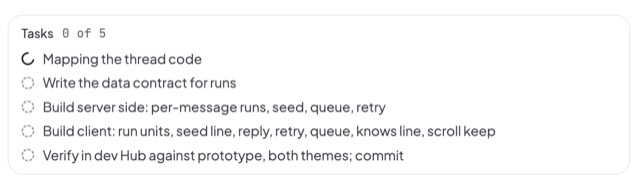
Built in the session worktree
The build runs as a task list on its own branch, through subagents, and ends with a check against the prototype in both themes.
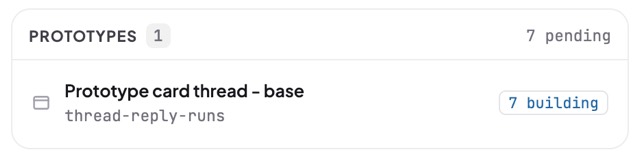
Status flows back to the drawer
While it builds, the prototype shows how many requests are building, so I can see progress without opening the session.
Coming soon.
The rest will arrive one by one, alongside the LinkedIn articles I write from time to time.